


BROTHER WOLF, The Zoomorphic functional object
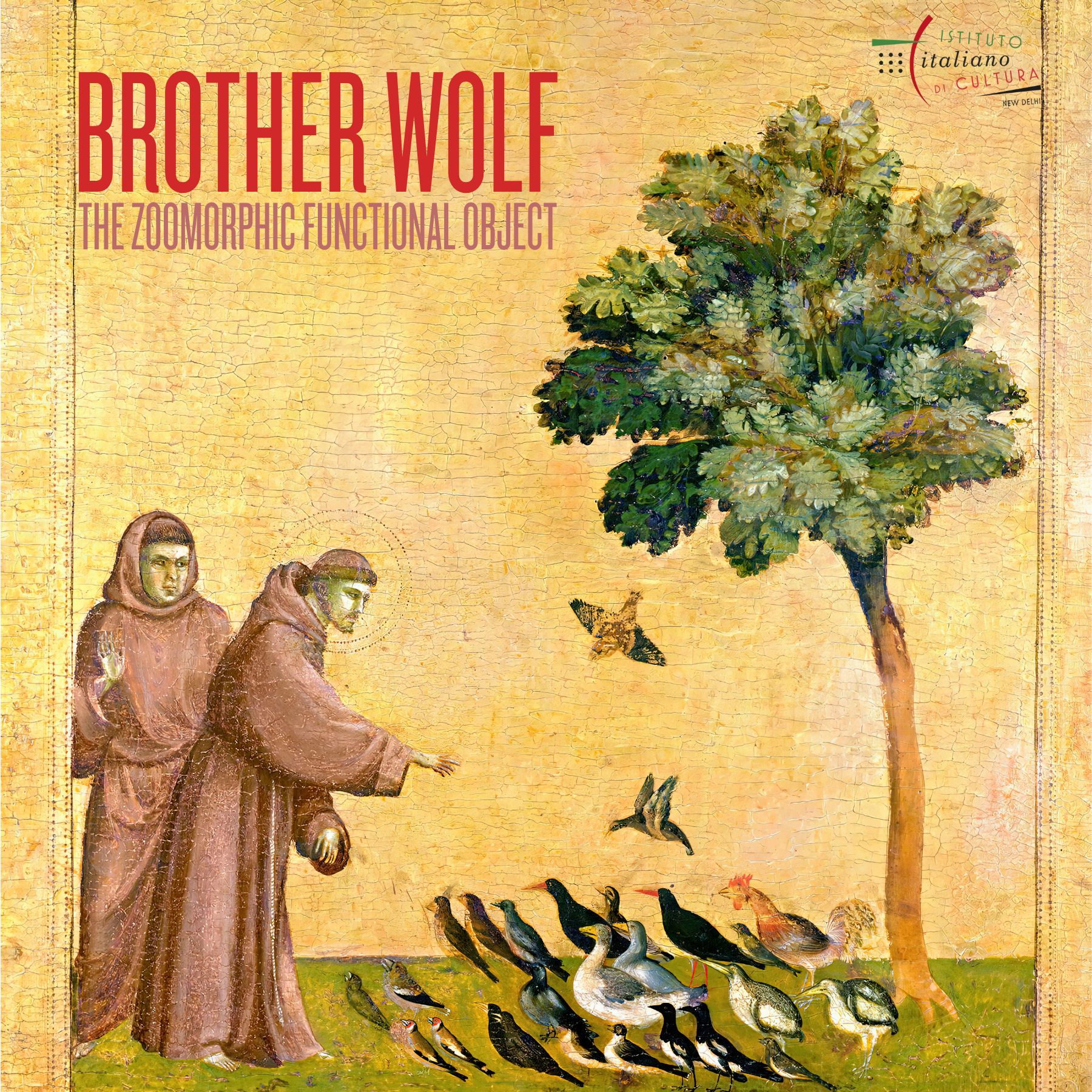
The year 2026 marks the eighth centenary of the death of Saint Francis of Assisi. The exhibition *Brother Wolf* borrows one of the most powerful images from his iconography—the wolf as a brother and interlocutor of man—to reflect upon a long history of symbolic and material proximity between humans and animals, a history inscribed within the objects of everyday life.
Since antiquity, zoomorphic forms have inhabited household implements: pitchers, oil lamps, handles, vessels, and containers have been modeled in the likeness of birds, lions, horses, fish, or fantastic creatures. In the cultures of Greco-Roman antiquity and the traditions of ancient India, these objects did not merely represent animals; rather, they translated into concrete form a worldview in which the natural and human realms were deeply intertwined. The animal thus became a symbolic mediator: a guardian, a companion, and at times, a household deity.
Drawing upon selected archaeological examples from Greco-Roman and Indian contexts, the exhibition traverses the centuries to reach the realm of contemporary design, focusing in particular on works drawn from the collection of the ADI Design Museum in Milan—home to the objects awarded the prestigious Compasso d’Oro. Here, the zoomorphic theme re-emerges with surprising continuity: reinterpreted through irony, formal synthesis, or refined abstraction, the animal returns to populate the domestic space.
In the work of certain masters of Italian design—including Achille Castiglioni, Alessandro Mendini, and Ettore Sottsass—the presence of the animal manifests as a design gesture oscillating between function and narrative. At times explicit, at others allusive, the animal form becomes a poetic device capable of humanizing the object and establishing an affective bond with its user. *Fratello Lupo* thus proposes an anthropological reading of zoomorphic objects, prioritizing the domestic environment as the setting where these forms find their most intense and enduring expression. The home becomes the theater of a symbolic coexistence between species: through utensils, containers, and tools, the animal imaginary enters into daily life, transforming ordinary gestures into acts of cultural memory.